NIGERIAN MODERNISM
A monumental Tate Modern exhibition celebrates the evolution of Nigerian art as a token of freedom, optimism, and collective imagination
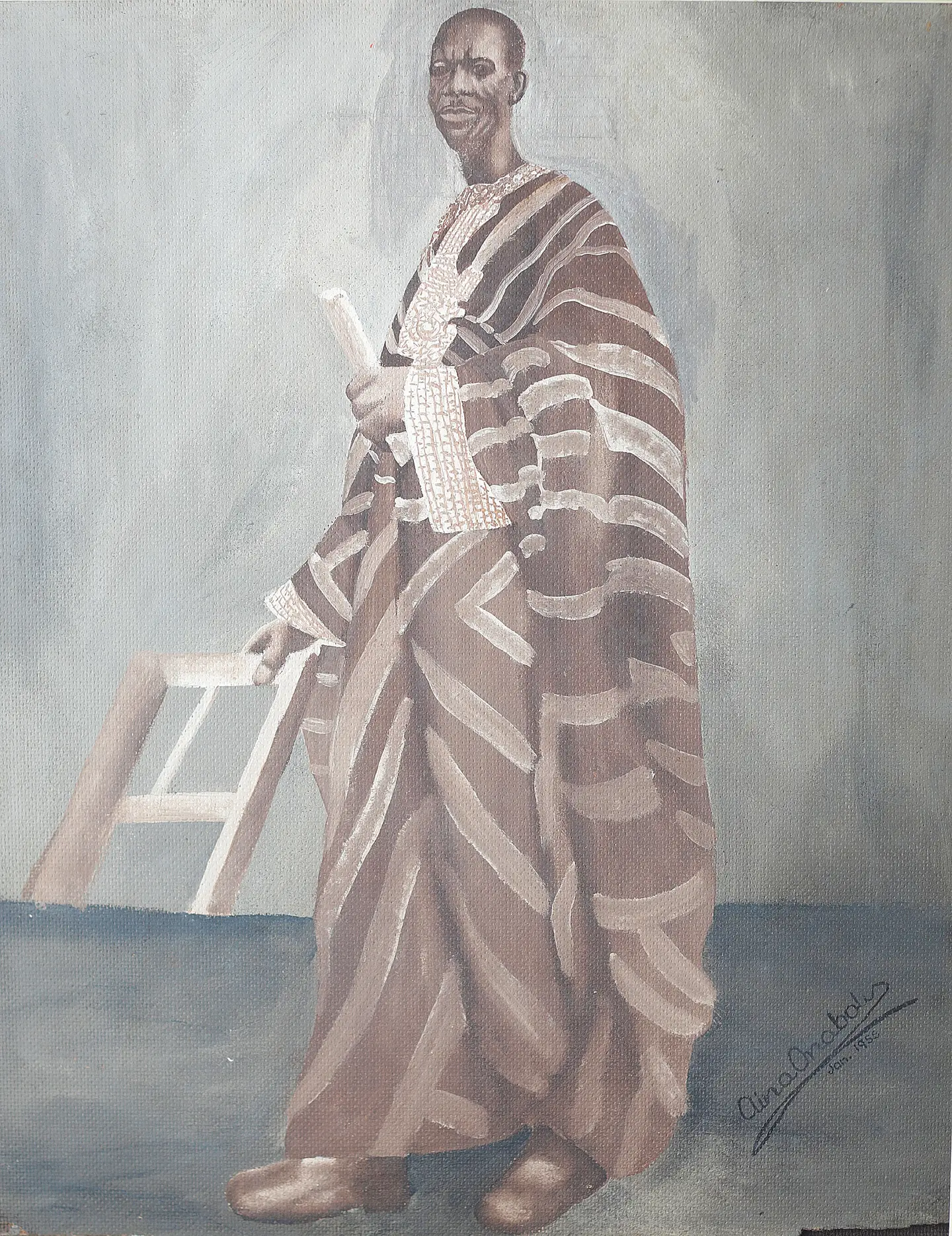
Aina Onabolu’s Portrait of an African Man 1955.
Opening against a backdrop of cultural and artistic rebellion, the long-awaited Nigerian Modernism celebrates the pioneering work of artists who defined Nigeria’s visual landscape before and after independence from British colonial rule in 1960. The exhibition interrogates the intersections of tradition, modernity, and political change, offering a critical lens through which to understand how Nigerian artists navigated both local and global artistic currents. It traces networks of creativity that spanned Zaria, Ibadan, Lagos, and Enugu, as well as European capitals including London, Munich, and Paris, revealing how artistic innovation was not confined to geography but emerged through exchange, dialogue, and collaboration. Collectives such as the Zaria Art Society and the Mbari Artists’ and Writers’ Club became incubators of experimentation, blending indigenous techniques, local materials, and European modernist methods to create multidimensional works that challenged conventional notions of form and aesthetic value.
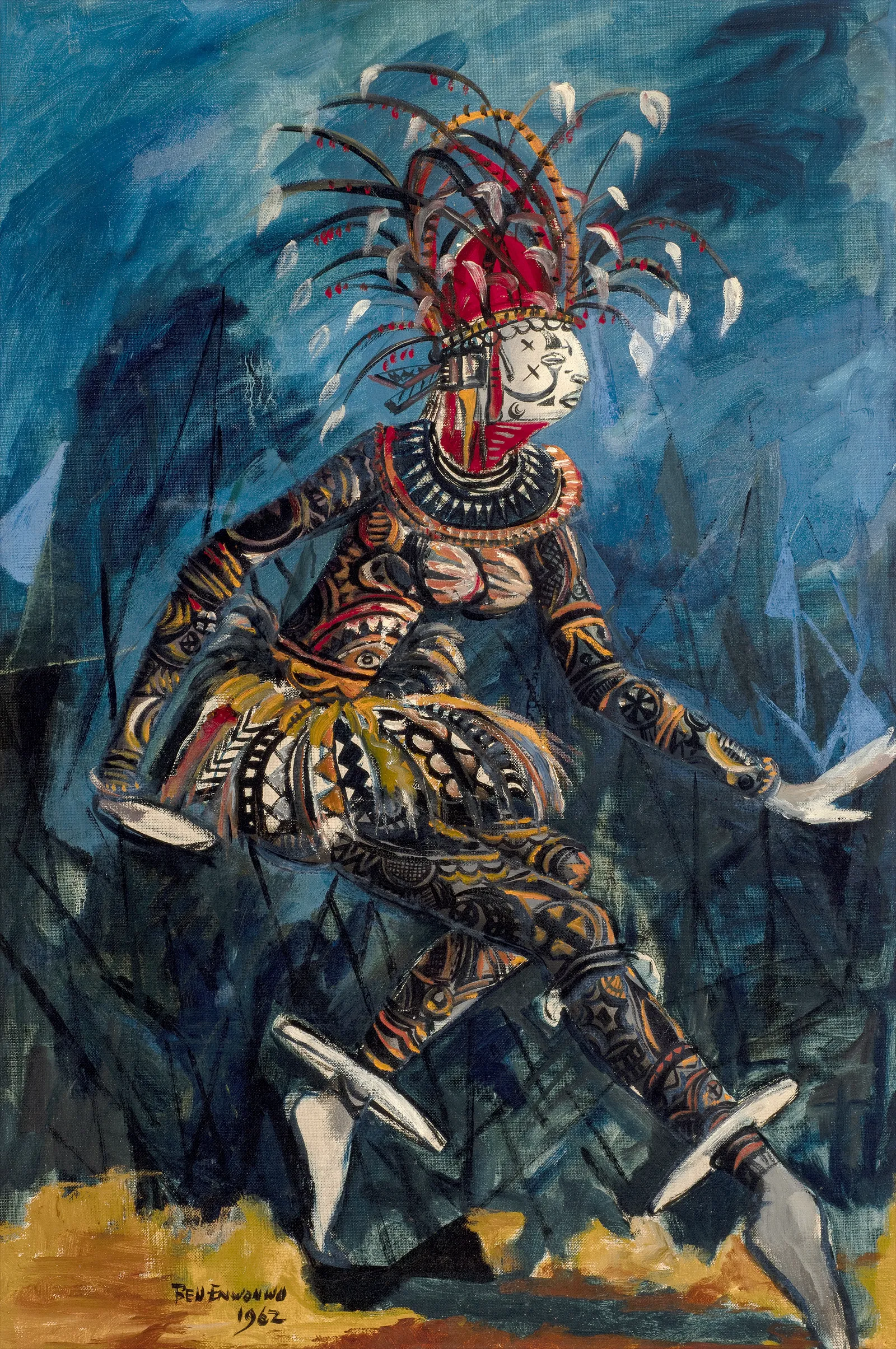
Ben Enwonwu, The Dancer (Agbogho Mmuo - Maiden Spirit Mask), 1962. (Image credit: © Ben Enwonwu Foundation, courtesy Ben Uri Gallery & Museum)
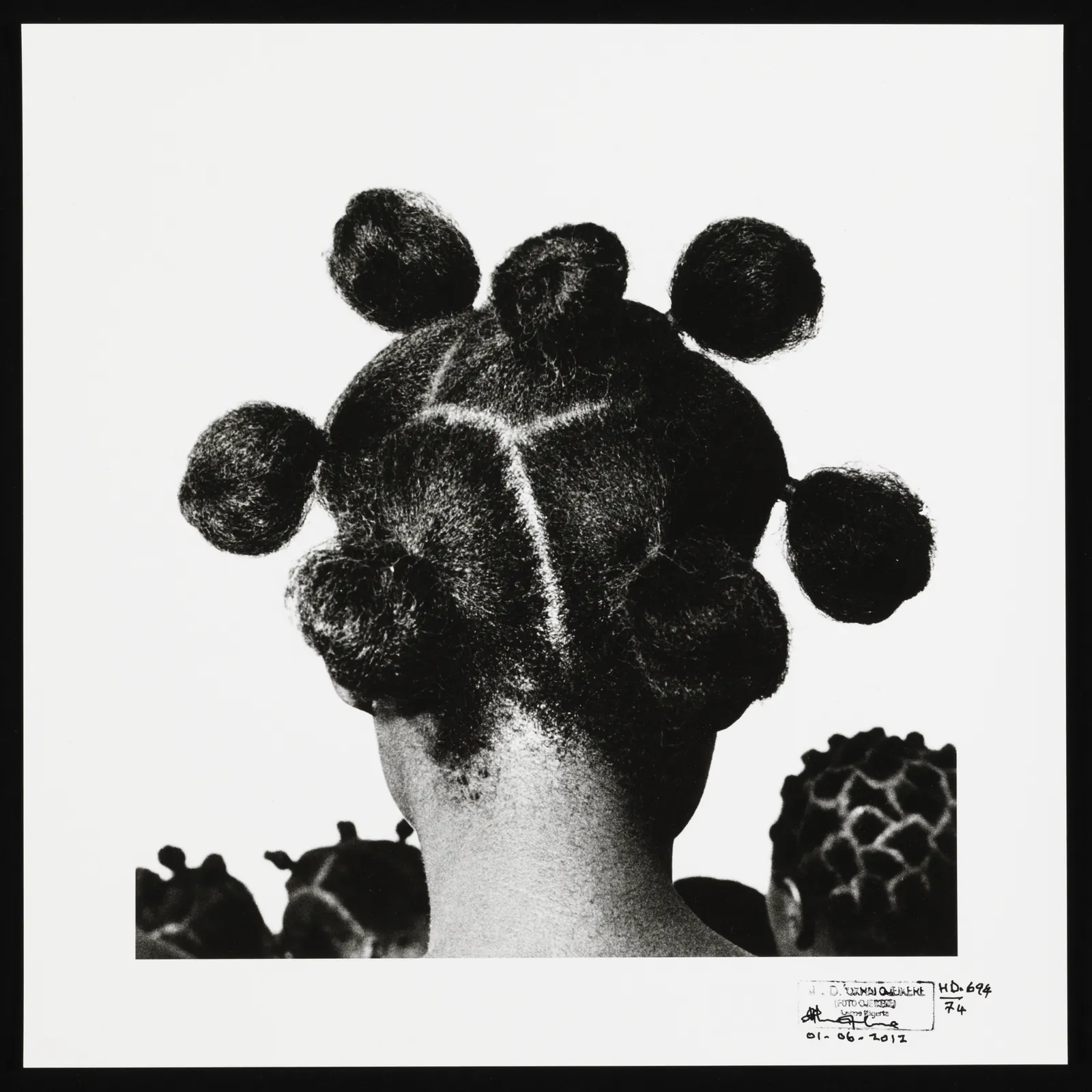
JD Okhai Ojeikere, Untitled (Mkpuk Eba), 1974, printed 2012. (Image credit: © reserved. Tate)
Spanning the 1940s to the 1980s, the exhibition situates these works within Nigeria’s complex historical, political, and social landscape. Beginning amid Africa’s simmering decolonisation movements, it charts the optimism and national ambition surrounding independence in 1960, the economic and cultural expansion that followed, and the ruptures caused by the civil war of 1967. The later decades reveal a global diaspora of Nigerian artists who engaged critically with international modernism while retaining deep connections to local cultural practices. By presenting this extended timeline, The exhibition interrogates how artistic production was both shaped by and reflective of broader societal transformations; from political upheaval and economic change to evolving ideas of identity, belonging, and creative freedom. Curators Osei Bonsu and Bilal Akkouche structure the exhibition to echo the experimental and dialogic energy of the works themselves. The arrangement is deliberately non-linear, emphasizing thematic, formal, and conceptual connections rather than chronological progression. This approach allows viewers to witness the multiplicity of modernist strategies deployed by Nigerian artists, from the abstraction of Uzo Egonu to the socially engaged narrative work of Ben Enwonwu, the innovative sculptural practice of El Anatsui, and the mastery of traditional forms reinterpreted by Ladi Kwali. The exhibition reveals not a singular “modernism” but a restless conversation between individual vision, collective enterprise, and cultural legacy.
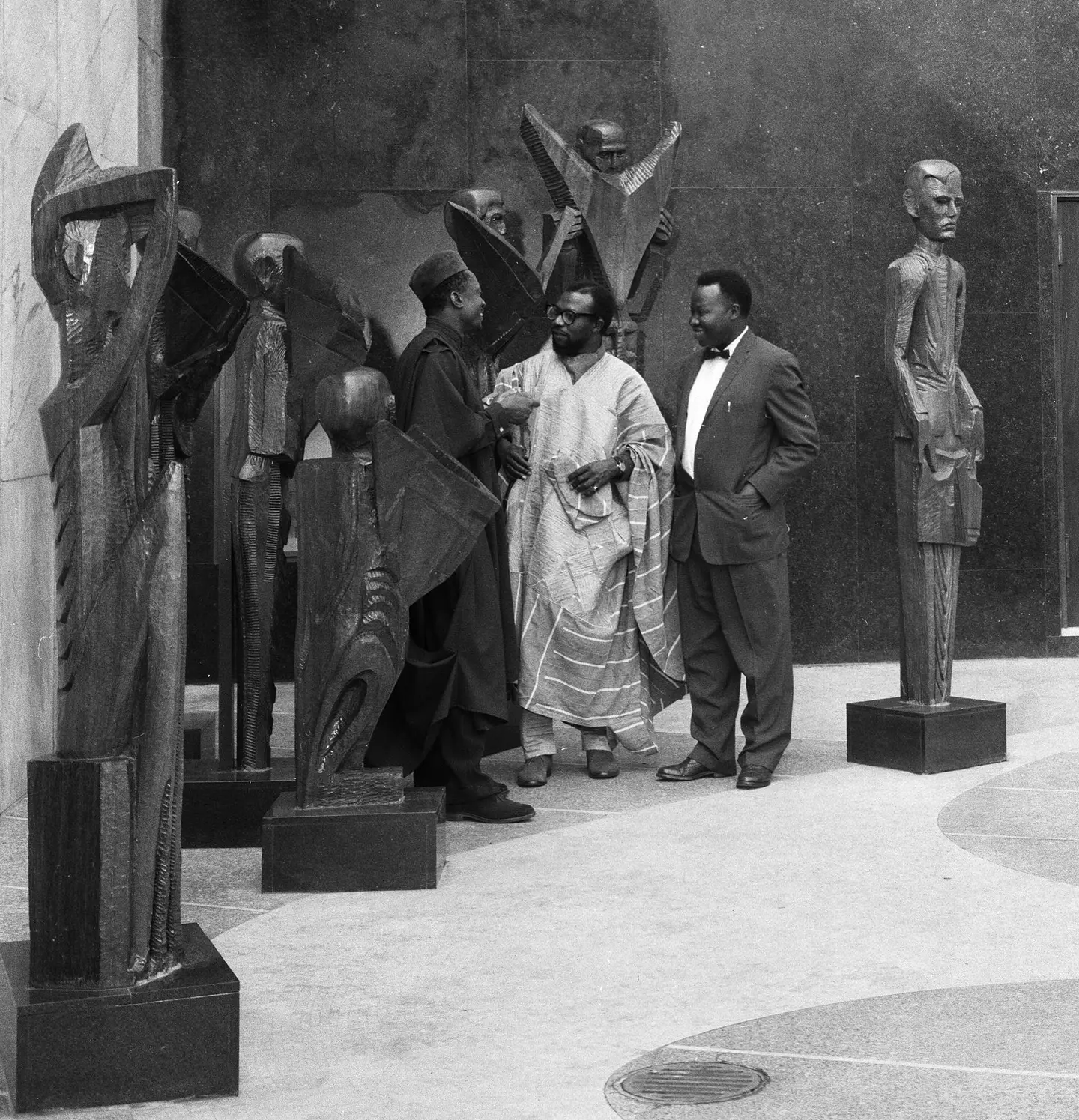
Ben Enwonwu (centre) and his ebony sculptures commissioned by the Daily Mirror in 1960
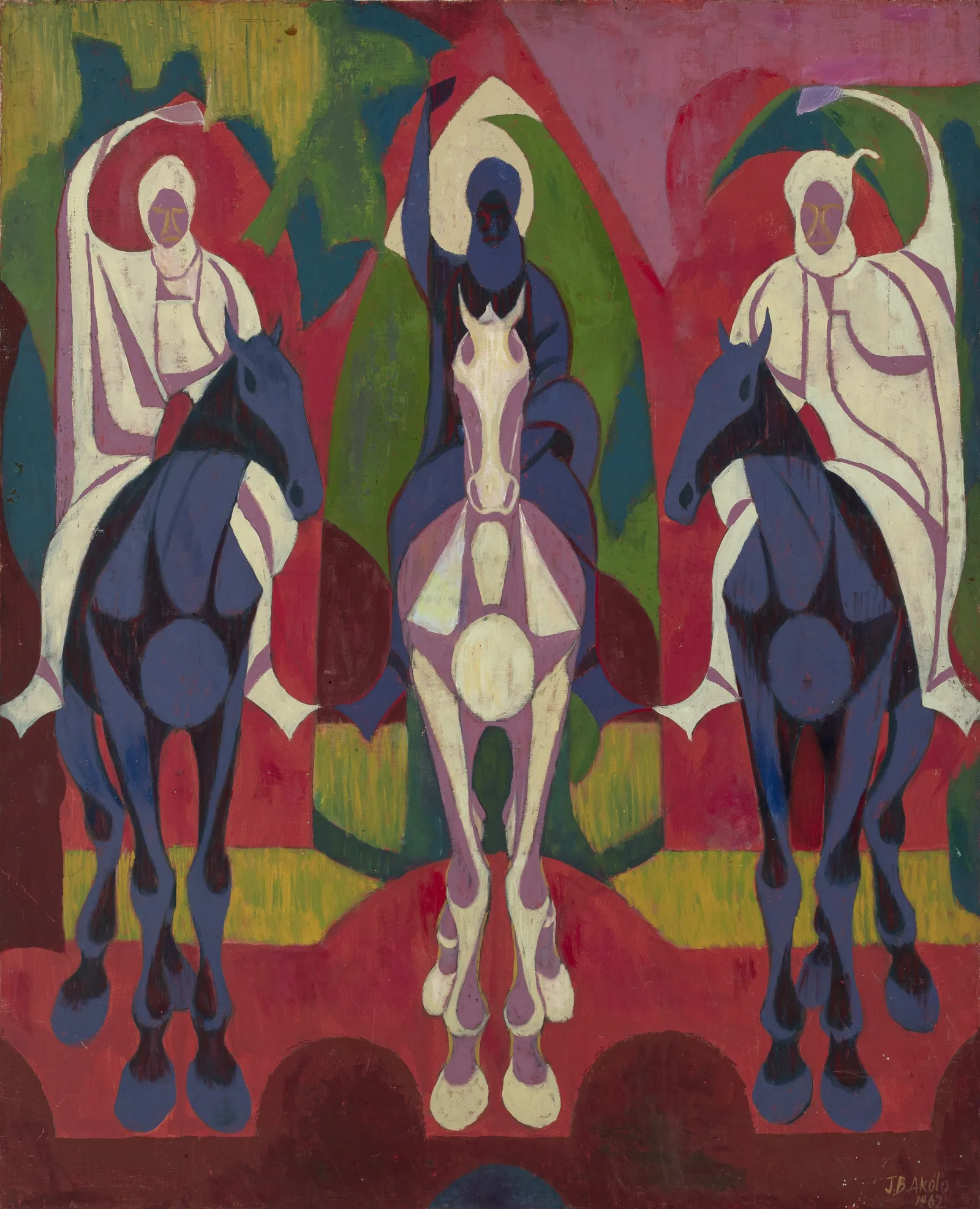
Jimo Akolo Fulani Horsemen, 1962. (Image credit: © Reserved. Courtesy Bristol Museum and Art Gallery)
Featuring over 250 works by more than 50 artists, the show demonstrates the diversity of media, scale, and conceptual approaches that characterized the movement. Painting, sculpture, textiles, and poetry are interwoven, highlighting the porous boundaries between fine art, craft, and literary practice. The curatorial emphasis on dialogue across time, medium, and geography underscores the experimental drive of Nigerian Modernism, its commitment to questioning, innovating, and imagining alternatives to colonial and post-colonial frameworks. At its core, the exhibition is a meditation on freedom, imagination, and cultural resilience. It challenges viewers to consider how artists negotiated local and global pressures, articulated aspirations for collective progress, and established modes of visual and intellectual critique that continue to resonate today. By foregrounding both the individual and the networked dimensions of artistic production, the exhibition situates Nigerian Modernism not only as a historical phenomenon but also as a continuing reference point for contemporary debates about form, identity, and the role of the artist in society.
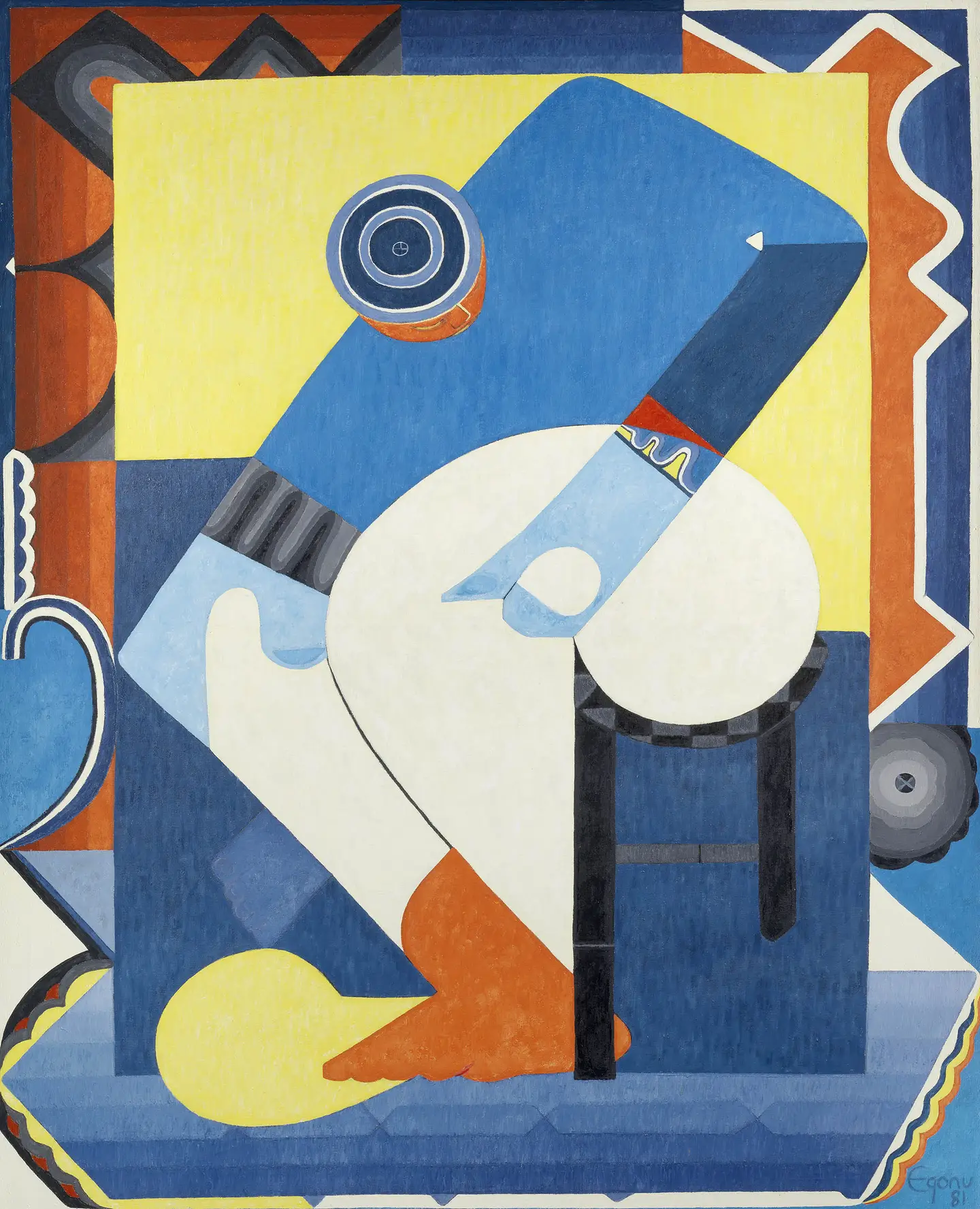
‘Heavily invested in the impact of war and independence’: Uzo Egonu, Stateless People; an artist with beret, 1981
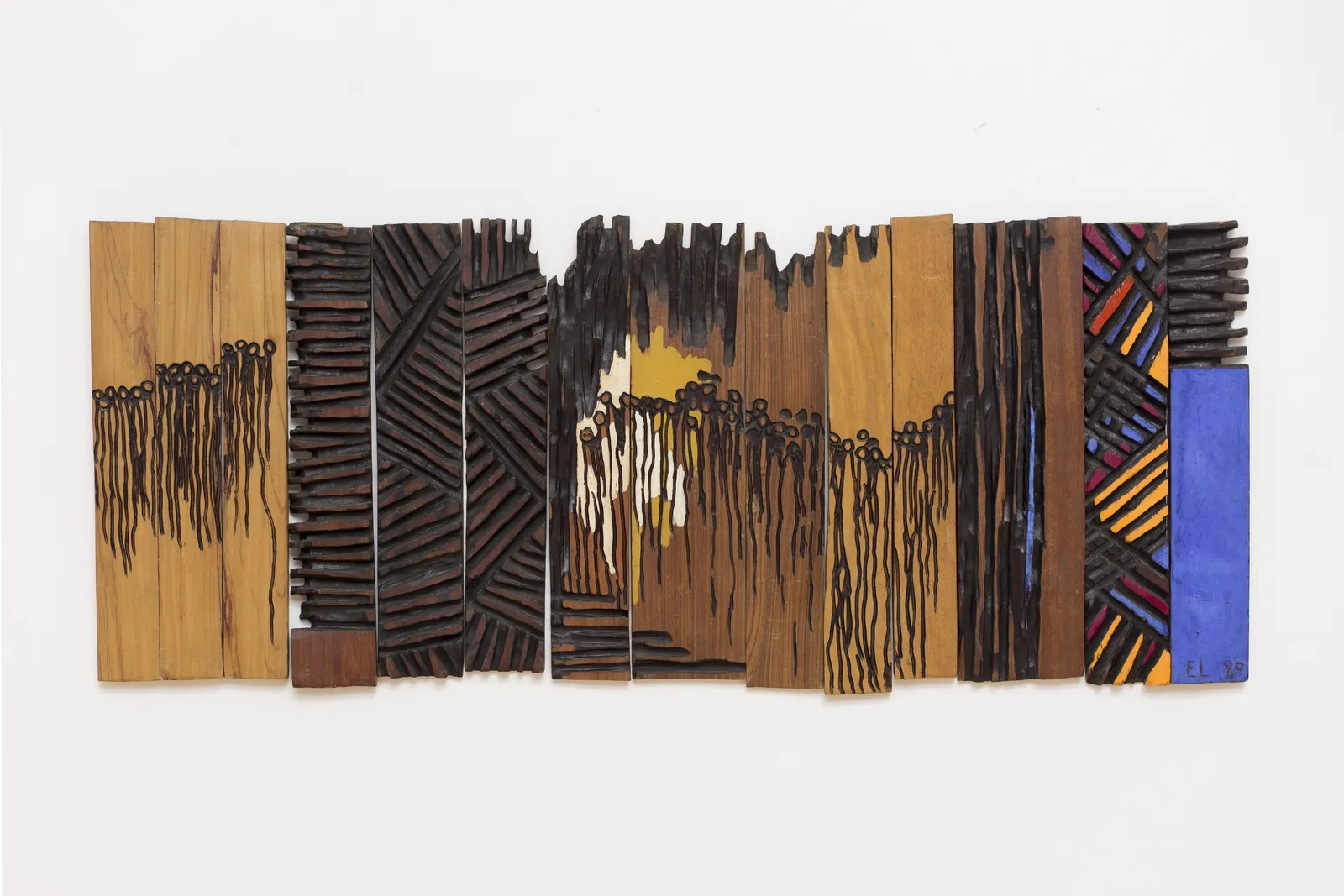
El Anatsui, Solemn Crowds at Dawn, 1989. (Image credit: © El Anatsui. Tate.)
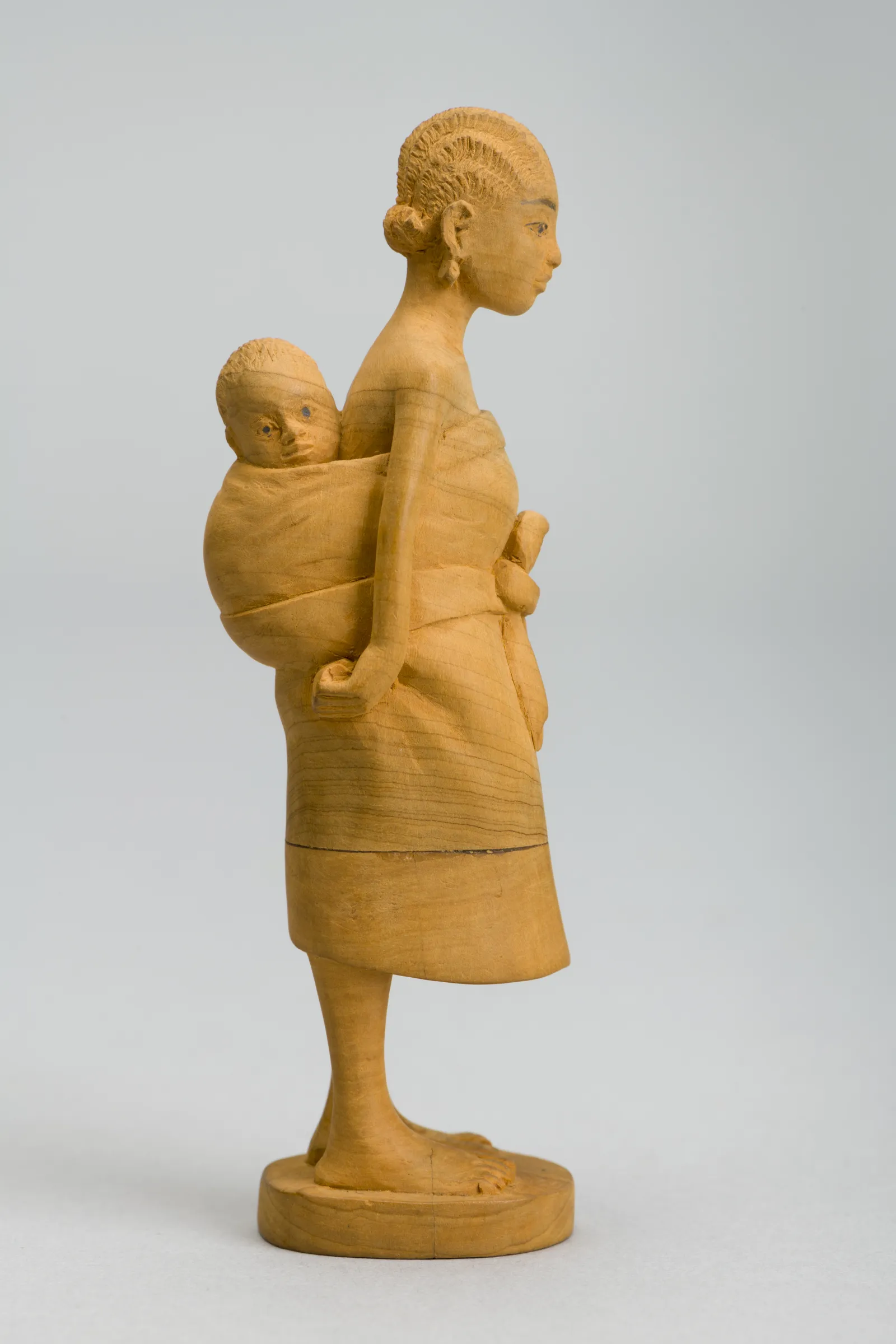
Justus D Akeredolu, Thorn Carving c.1930s. (Image credit: © Justus D. Akeredolu. Research and Cultural Collections, University of Birmingham.)
Through this lens, Nigerian Modernism is more than a survey of historical works; it is a critical exploration of creativity as a medium for negotiation, resistance, and expression. It illuminates the ways in which Nigerian artists have asserted agency over their cultural narratives, constructed spaces for experimentation, and positioned African modernism within the broader global discourse. The exhibition ultimately invites reflection on the enduring capacity of art to transform, question, and imagine, offering a rich, critical engagement with the complex legacies of modernist practice in Nigeria.
Nigerian Modernism is at Tate Modern, London from 8 October 2025 to 10 May 2026. All images courtesy of Tate Modern. Cover image above: Ben Enwonwu’s The Durbar of Eid-ul-Fitr, Kano, Nigeria 1955.
A monumental Tate Modern exhibition celebrates the evolution of Nigerian art as a token of freedom, optimism, and collective imagination
Aina Onabolu’s Portrait of an African Man 1955.
Opening against a backdrop of cultural and artistic rebellion, the long-awaited Nigerian Modernism celebrates the pioneering work of artists who defined Nigeria’s visual landscape before and after independence from British colonial rule in 1960. The exhibition interrogates the intersections of tradition, modernity, and political change, offering a critical lens through which to understand how Nigerian artists navigated both local and global artistic currents. It traces networks of creativity that spanned Zaria, Ibadan, Lagos, and Enugu, as well as European capitals including London, Munich, and Paris, revealing how artistic innovation was not confined to geography but emerged through exchange, dialogue, and collaboration. Collectives such as the Zaria Art Society and the Mbari Artists’ and Writers’ Club became incubators of experimentation, blending indigenous techniques, local materials, and European modernist methods to create multidimensional works that challenged conventional notions of form and aesthetic value.
Ben Enwonwu, The Dancer (Agbogho Mmuo - Maiden Spirit Mask), 1962. (Image credit: © Ben Enwonwu Foundation, courtesy Ben Uri Gallery & Museum)
JD Okhai Ojeikere, Untitled (Mkpuk Eba), 1974, printed 2012. (Image credit: © reserved. Tate)
Spanning the 1940s to the 1980s, the exhibition situates these works within Nigeria’s complex historical, political, and social landscape. Beginning amid Africa’s simmering decolonisation movements, it charts the optimism and national ambition surrounding independence in 1960, the economic and cultural expansion that followed, and the ruptures caused by the civil war of 1967. The later decades reveal a global diaspora of Nigerian artists who engaged critically with international modernism while retaining deep connections to local cultural practices. By presenting this extended timeline, The exhibition interrogates how artistic production was both shaped by and reflective of broader societal transformations; from political upheaval and economic change to evolving ideas of identity, belonging, and creative freedom. Curators Osei Bonsu and Bilal Akkouche structure the exhibition to echo the experimental and dialogic energy of the works themselves. The arrangement is deliberately non-linear, emphasizing thematic, formal, and conceptual connections rather than chronological progression. This approach allows viewers to witness the multiplicity of modernist strategies deployed by Nigerian artists, from the abstraction of Uzo Egonu to the socially engaged narrative work of Ben Enwonwu, the innovative sculptural practice of El Anatsui, and the mastery of traditional forms reinterpreted by Ladi Kwali. The exhibition reveals not a singular “modernism” but a restless conversation between individual vision, collective enterprise, and cultural legacy.
Ben Enwonwu (centre) and his ebony sculptures commissioned by the Daily Mirror in 1960
Jimo Akolo Fulani Horsemen, 1962. (Image credit: © Reserved. Courtesy Bristol Museum and Art Gallery)
Featuring over 250 works by more than 50 artists, the show demonstrates the diversity of media, scale, and conceptual approaches that characterized the movement. Painting, sculpture, textiles, and poetry are interwoven, highlighting the porous boundaries between fine art, craft, and literary practice. The curatorial emphasis on dialogue across time, medium, and geography underscores the experimental drive of Nigerian Modernism, its commitment to questioning, innovating, and imagining alternatives to colonial and post-colonial frameworks. At its core, the exhibition is a meditation on freedom, imagination, and cultural resilience. It challenges viewers to consider how artists negotiated local and global pressures, articulated aspirations for collective progress, and established modes of visual and intellectual critique that continue to resonate today. By foregrounding both the individual and the networked dimensions of artistic production, the exhibition situates Nigerian Modernism not only as a historical phenomenon but also as a continuing reference point for contemporary debates about form, identity, and the role of the artist in society.
‘Heavily invested in the impact of war and independence’: Uzo Egonu, Stateless People; an artist with beret, 1981
El Anatsui, Solemn Crowds at Dawn, 1989. (Image credit: © El Anatsui. Tate.)
Justus D Akeredolu, Thorn Carving c.1930s. (Image credit: © Justus D. Akeredolu. Research and Cultural Collections, University of Birmingham.)
Through this lens, Nigerian Modernism is more than a survey of historical works; it is a critical exploration of creativity as a medium for negotiation, resistance, and expression. It illuminates the ways in which Nigerian artists have asserted agency over their cultural narratives, constructed spaces for experimentation, and positioned African modernism within the broader global discourse. The exhibition ultimately invites reflection on the enduring capacity of art to transform, question, and imagine, offering a rich, critical engagement with the complex legacies of modernist practice in Nigeria.
Nigerian Modernism is at Tate Modern, London from 8 October 2025 to 10 May 2026. All images courtesy of Tate Modern. Cover image above: Ben Enwonwu’s The Durbar of Eid-ul-Fitr, Kano, Nigeria 1955.