WHERE IS SAMUEL?
Jack Markovitz’s New Short Film Examines Migration, Family, Fashion and the Freedom of Becoming
“We came to this country looking for opportunities,” says the father in Johannesburg-based director Jack Markovitz’s latest offering, WHERE IS SAMUEL? Whether those greener pastures promise economic growth, better education, or refuge from political or environmental turmoil, migration demands a great deal of reconciliation. There are new beginnings, but also farewells: to homes, familiar streets, celebrations, loved ones and ways of life that cannot always be sustained in a new country. Shot in 2025, the film looks at the more personal cost of migration, following a Congolese family in South Africa and their first-generation son, Samuel. The weight of familial and cultural expectations, and the friction of assimilation, unfold through fractured images that blur past and present. At the centre of the film is a generational conflict expressed through clothing. Samuel’s father, portrayed by designer and real-life sapeur Michael Ilunga, struggles to accept his son’s style: blue jeans, sneakers, a T-shirt and a GCLO Studios all-weather jacket. To him, it signals a rejection of La Sape’s recognisable “smart look”.
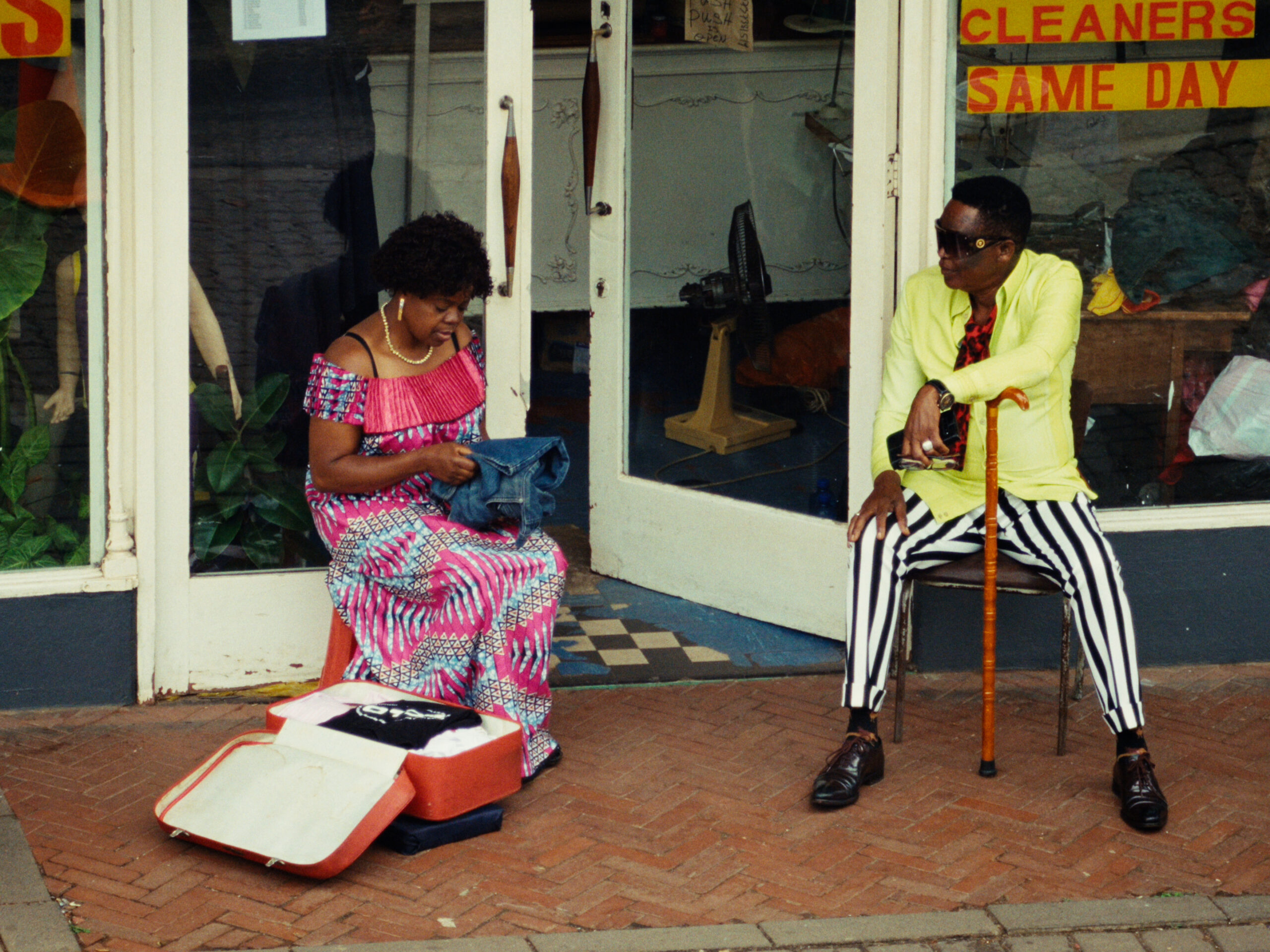
Written by Markovitz and co-art director Khumo Morojele, the story is rooted in lived immigrant experience. The project initially began with Gamuchirai Dumbutshena, whose London-based brand GCLO Studios was heading to South Africa and wanted to work on a project during his visit to Johannesburg. The film’s origins are deeply connected to Johannesburg, particularly Yeoville, where much of it was shot. Morojele first encountered Ilunga in the city, where his distinctive style stood out amid the buzz of Gandhi Square. The team later spent time with him, learning about his move from the Democratic Republic of Congo to South Africa, his experience as a sapeur in both countries, and how much his children had changed since their relocation. Once a predominantly white area under Apartheid’s Group Areas Act, Yeoville became a racially diverse neighbourhood in the 1980s, developing a reputation for its artistic and radical energy. Today, it remains home to many immigrants and a dense mix of African cultures.
“I've always had a passion for storytelling. Stories are important, and I think a good story helps, and a great story makes you feel challenged,” says Gam.
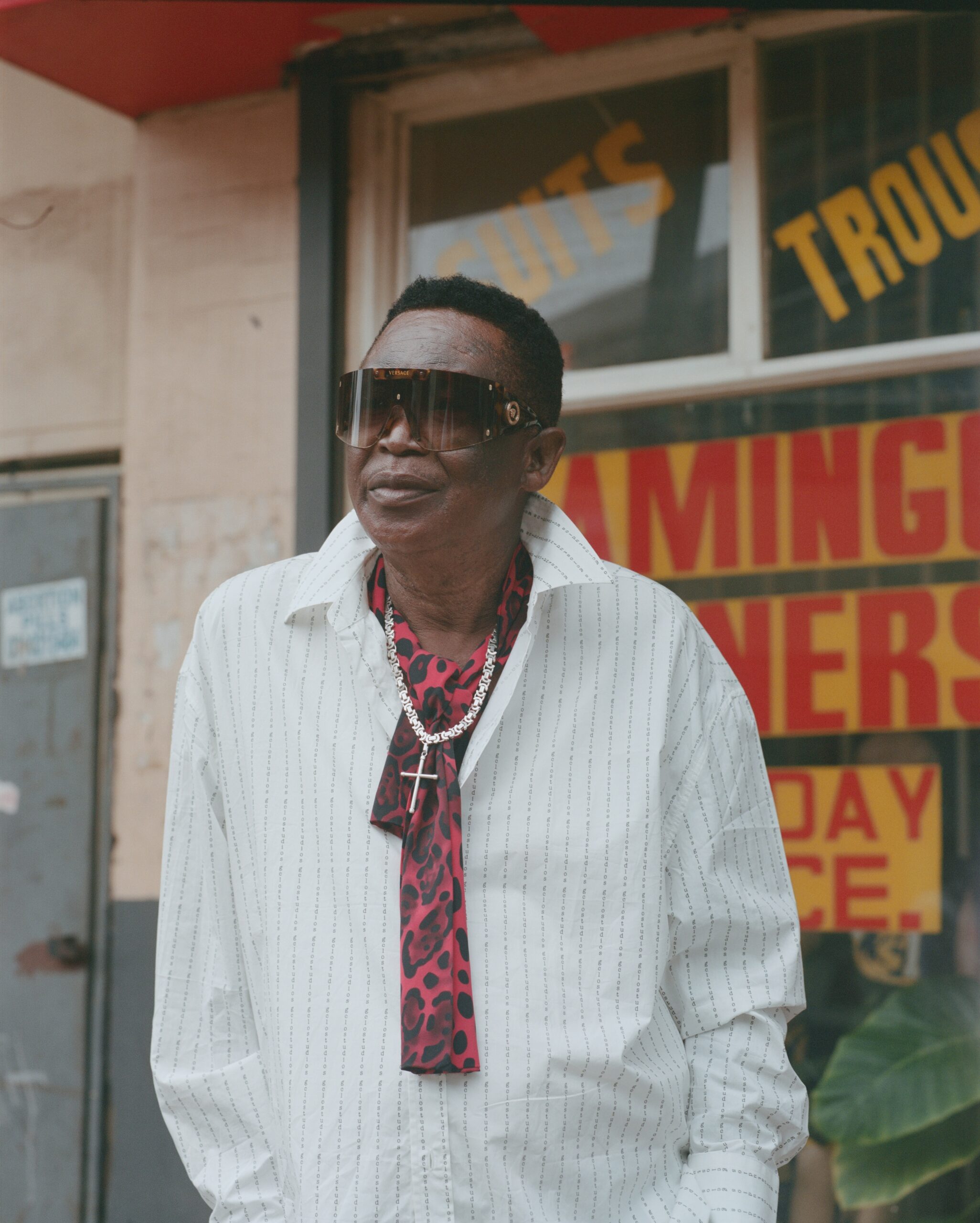
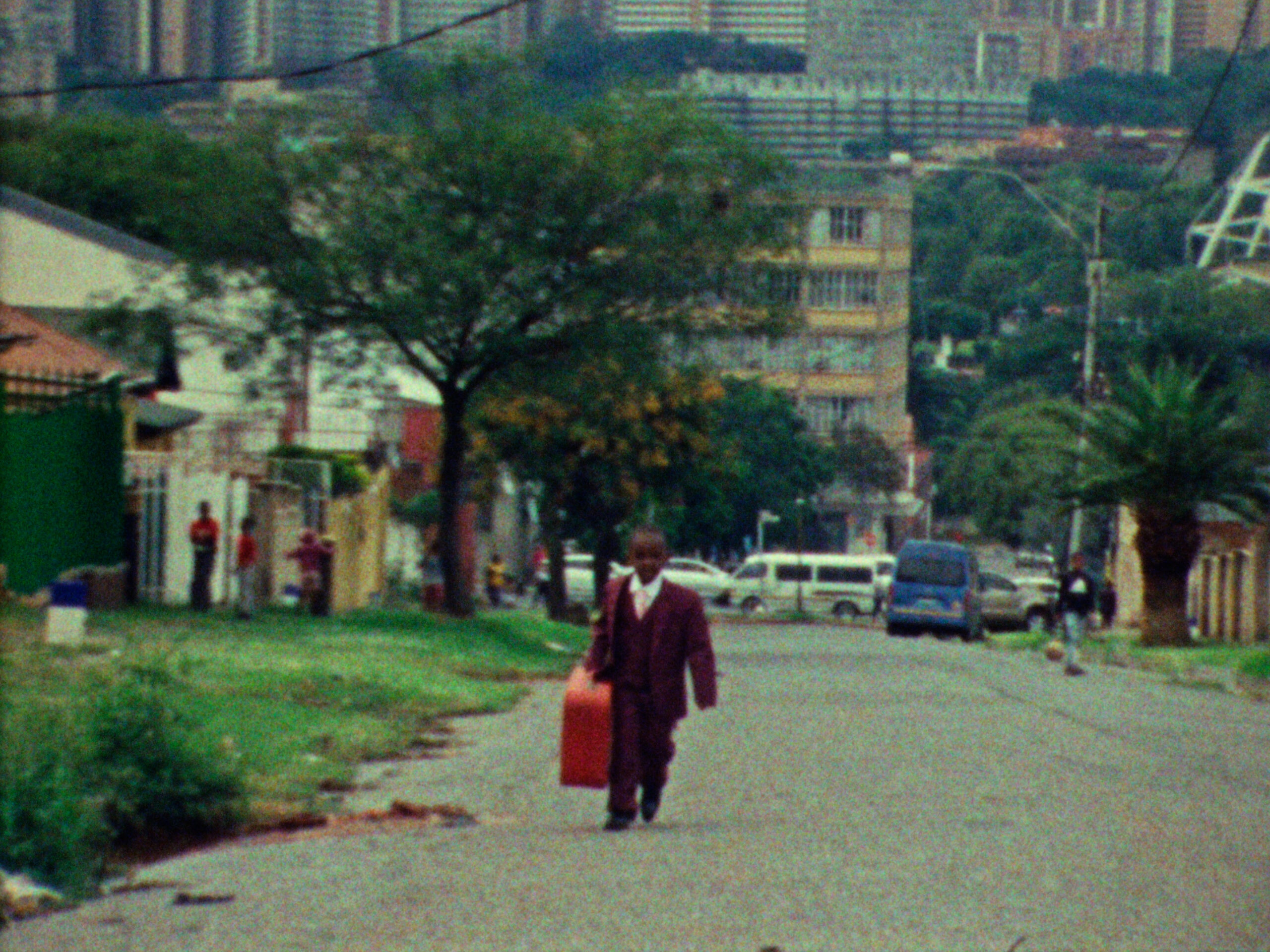
“If you experience Yeoville, you see so much material culture flow in and out. Our parents used to party there, and it’s a nice full circle to go back and comment on what’s left,” Morojele says. That material culture becomes central to WHERE IS SAMUEL?. Morojele sees La Sape as running parallel to South African Pantsula culture. “It’s commentary on the different fashion cultures,” he says. “It shows the conflict between an old way of dressing and then Samuel representing the new form, and how it can conflict within a family as well.” Gam sees another tension in the story: what happens when children grow up in a world different from the one their parents knew. “Your children are growing up in a different environment to [their parents]; they’re growing up differently, and that can come with its own pains,” he says. Filmed from the balcony of the Yeoville Dinner Club, Markovitz’s camera captures a tender and charged exchange between Samuel’s father and mother, played by Solange Nduengisa. Their interaction feels remarkably intimate, almost like overhearing an argument between your own parents. “Samuel was supposed to study and become a big person and dress like me, but then Samuel started wearing things like this,” the father complains to his wife. Memory is equally important to the film’s visual language. Co-art director Francesco Mbele cites Alice Rohrwacher’s La Chimera (2023) as an influence for its dreamy blurring of past and present.
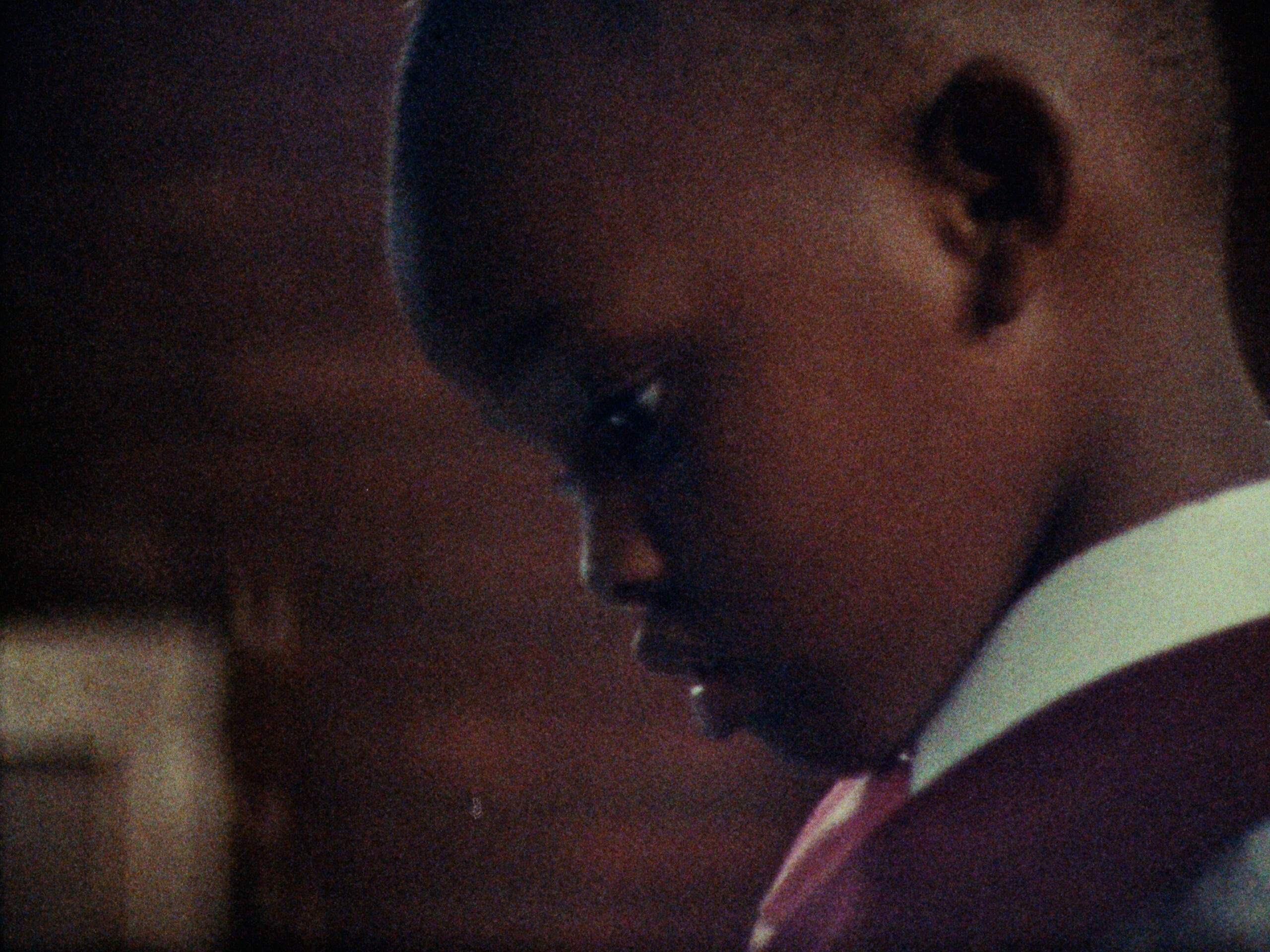
“The reality of the current conversation, but then the nostalgia of the past, and creating this question: in the past, what was real and what was your brain making a fantasy of,” Mbele says. Captured on a 1990s Super 8 camera, these memories appear hazy and staggered. Even the present-day scenes retain a sense of lived reality. Markovitz recalls filming Michael and Solange as passers-by moved around them and a working laundromat continued to bustle. “It felt like we were catching this real conversation between the two,” he says. Young Samuel, played by Jordan Ndlovu, carries his father’s expectations in a three-piece suit and a suitcase almost bigger than himself. For Markovitz, fashion becomes a way of tracing generational change within immigrant families. “Fashion is ultimately one component that makes up how much people can depart on a generational level,” he says. “I think, particularly, immigrant families can witness this kind of seismic shift in the people that they are, that they’re becoming, who their family is becoming through fashion.” For Thato Nzimande, clothing becomes a form of memory: “It’s moulding these clothes to feel like a time capsule, to tell a story of the past, future and a little bit of the present while we watch it.” The GCLO Studios jacket extends that idea, speaking to movement, protection and belonging. For Gam, clothing can create “a space in which you can exist and find people like yourself.” At just two minutes and 40 seconds, excluding credits, WHERE IS SAMUEL? is brief but layered. Its story of migration ultimately becomes a story about becoming: the distance between what parents imagine for their children and who those children decide to be. Sometimes, that better life looks different from what a parent imagined. And maybe a good jacket and a pair of jeans are a good start.
Jack Markovitz’s New Short Film Examines Migration, Family, Fashion and the Freedom of Becoming
“We came to this country looking for opportunities,” says the father in Johannesburg-based director Jack Markovitz’s latest offering, WHERE IS SAMUEL? Whether those greener pastures promise economic growth, better education, or refuge from political or environmental turmoil, migration demands a great deal of reconciliation. There are new beginnings, but also farewells: to homes, familiar streets, celebrations, loved ones and ways of life that cannot always be sustained in a new country. Shot in 2025, the film looks at the more personal cost of migration, following a Congolese family in South Africa and their first-generation son, Samuel. The weight of familial and cultural expectations, and the friction of assimilation, unfold through fractured images that blur past and present. At the centre of the film is a generational conflict expressed through clothing. Samuel’s father, portrayed by designer and real-life sapeur Michael Ilunga, struggles to accept his son’s style: blue jeans, sneakers, a T-shirt and a GCLO Studios all-weather jacket. To him, it signals a rejection of La Sape’s recognisable “smart look”.
Written by Markovitz and co-art director Khumo Morojele, the story is rooted in lived immigrant experience. The project initially began with Gamuchirai Dumbutshena, whose London-based brand GCLO Studios was heading to South Africa and wanted to work on a project during his visit to Johannesburg. The film’s origins are deeply connected to Johannesburg, particularly Yeoville, where much of it was shot. Morojele first encountered Ilunga in the city, where his distinctive style stood out amid the buzz of Gandhi Square. The team later spent time with him, learning about his move from the Democratic Republic of Congo to South Africa, his experience as a sapeur in both countries, and how much his children had changed since their relocation. Once a predominantly white area under Apartheid’s Group Areas Act, Yeoville became a racially diverse neighbourhood in the 1980s, developing a reputation for its artistic and radical energy. Today, it remains home to many immigrants and a dense mix of African cultures.
“I've always had a passion for storytelling. Stories are important, and I think a good story helps, and a great story makes you feel challenged,” says Gam.
“If you experience Yeoville, you see so much material culture flow in and out. Our parents used to party there, and it’s a nice full circle to go back and comment on what’s left,” Morojele says. That material culture becomes central to WHERE IS SAMUEL?. Morojele sees La Sape as running parallel to South African Pantsula culture. “It’s commentary on the different fashion cultures,” he says. “It shows the conflict between an old way of dressing and then Samuel representing the new form, and how it can conflict within a family as well.” Gam sees another tension in the story: what happens when children grow up in a world different from the one their parents knew. “Your children are growing up in a different environment to [their parents]; they’re growing up differently, and that can come with its own pains,” he says. Filmed from the balcony of the Yeoville Dinner Club, Markovitz’s camera captures a tender and charged exchange between Samuel’s father and mother, played by Solange Nduengisa. Their interaction feels remarkably intimate, almost like overhearing an argument between your own parents. “Samuel was supposed to study and become a big person and dress like me, but then Samuel started wearing things like this,” the father complains to his wife. Memory is equally important to the film’s visual language. Co-art director Francesco Mbele cites Alice Rohrwacher’s La Chimera (2023) as an influence for its dreamy blurring of past and present.
“The reality of the current conversation, but then the nostalgia of the past, and creating this question: in the past, what was real and what was your brain making a fantasy of,” Mbele says. Captured on a 1990s Super 8 camera, these memories appear hazy and staggered. Even the present-day scenes retain a sense of lived reality. Markovitz recalls filming Michael and Solange as passers-by moved around them and a working laundromat continued to bustle. “It felt like we were catching this real conversation between the two,” he says. Young Samuel, played by Jordan Ndlovu, carries his father’s expectations in a three-piece suit and a suitcase almost bigger than himself. For Markovitz, fashion becomes a way of tracing generational change within immigrant families. “Fashion is ultimately one component that makes up how much people can depart on a generational level,” he says. “I think, particularly, immigrant families can witness this kind of seismic shift in the people that they are, that they’re becoming, who their family is becoming through fashion.” For Thato Nzimande, clothing becomes a form of memory: “It’s moulding these clothes to feel like a time capsule, to tell a story of the past, future and a little bit of the present while we watch it.” The GCLO Studios jacket extends that idea, speaking to movement, protection and belonging. For Gam, clothing can create “a space in which you can exist and find people like yourself.” At just two minutes and 40 seconds, excluding credits, WHERE IS SAMUEL? is brief but layered. Its story of migration ultimately becomes a story about becoming: the distance between what parents imagine for their children and who those children decide to be. Sometimes, that better life looks different from what a parent imagined. And maybe a good jacket and a pair of jeans are a good start.