ZILIJIFA
Ibrahim Mahama takes us inside his landmark solo show at Kunsthalle Wien, Vienna
Ghanaian artist Ibrahim Mahama, widely recognised for his monumental installations that examine labor, materiality, and the histories embedded in everyday objects, is also the founder of the Savannah Centre for Contemporary Art (SCCA Tamale) and Red Clay Studio, platforms that support emerging creatives and experimental practice in Ghana. His landmark solo exhibition at Kunsthalle Wien in Vienna continues to interrogate the intersections of space, memory, and socio-economic histories, expanding the reach of his practice both locally and internationally. Installed across the first floor of Kunsthalle Wien’s Museums quartier, Mahama’s exhibition presents an entirely new body of commissioned work, spanning sculpture, photography, and video. Drawing on the material legacies of colonialism, post-colonialism, and industrialisation in Ghana, his practice collects, preserves, and renders accessible objects, buildings, and ephemera, addressing histories that are often inadequately documented. The exhibition develops Mahama’s ongoing research into the history of the Ghanaian railway network, established under British colonial rule in the 1890s. It realises a long-term ambition: to deconstruct, transport, and exhibit a full-size diesel locomotive−one of several British- and German-built trains Mahama has acquired since 2022. The mechanisms, vessels, and networks used to move goods and people become the foundation for a series of works exploring the act of loading, carrying, and unloading weight, alongside the metaphorical weight of history itself.
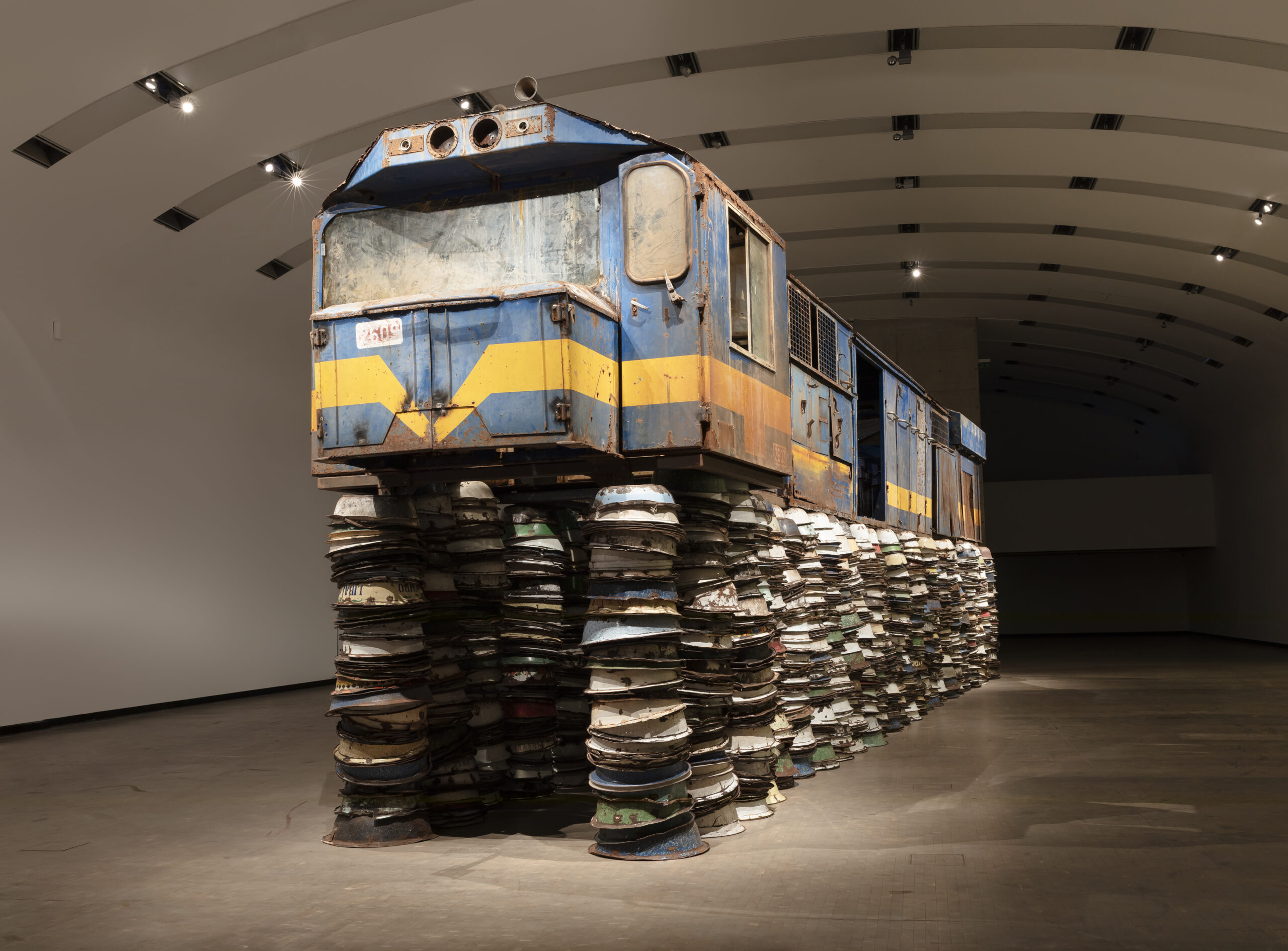
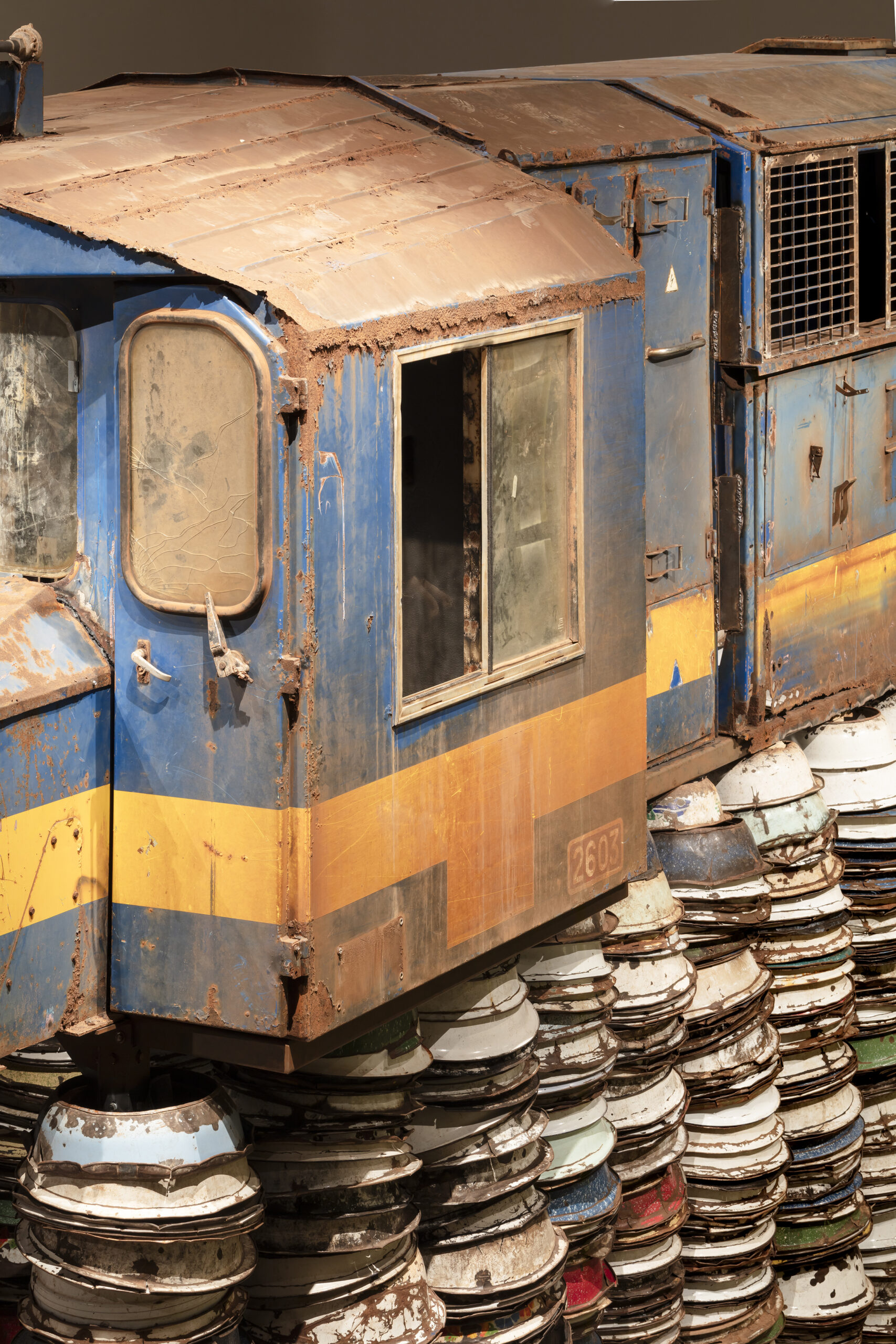
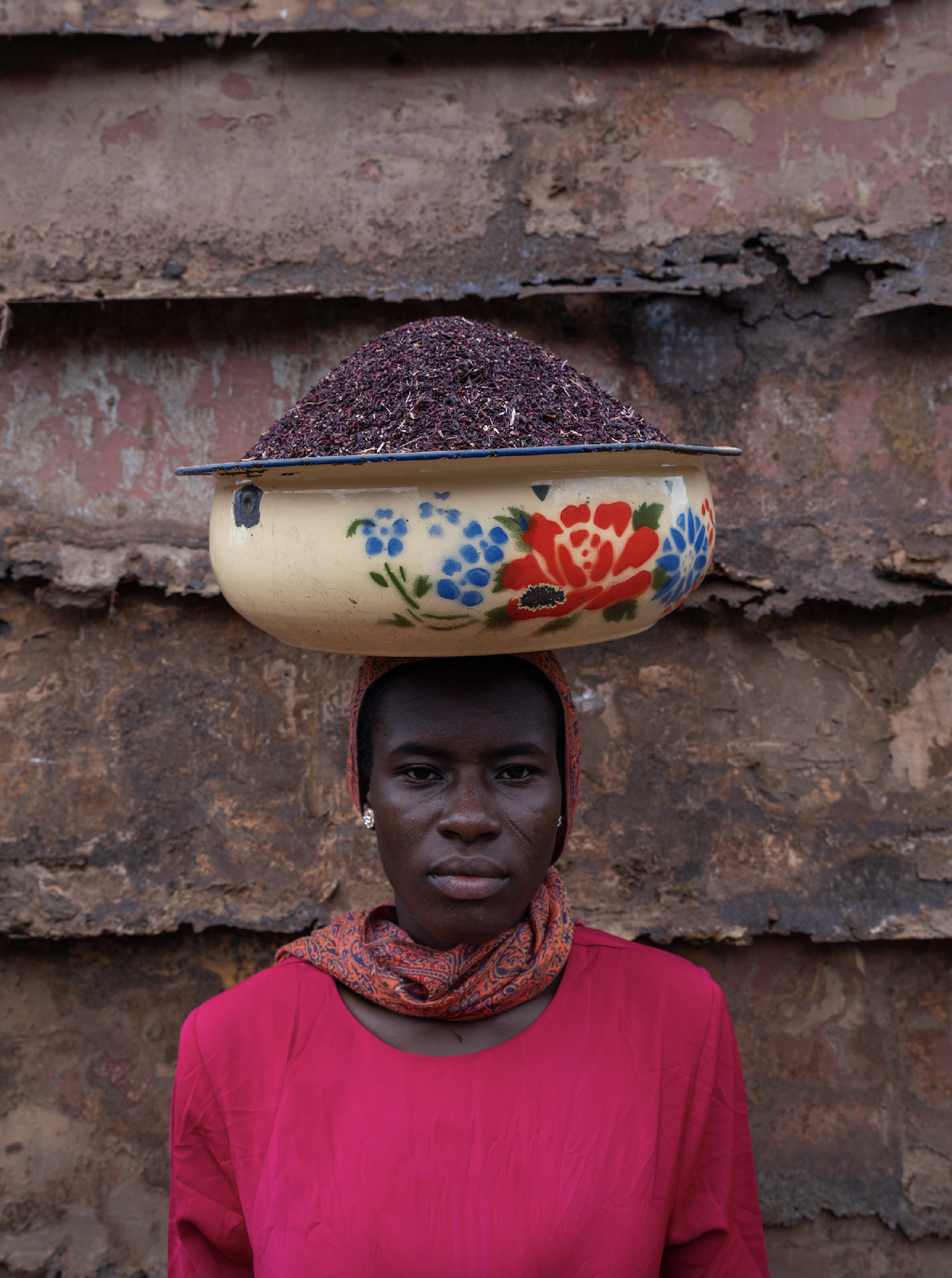
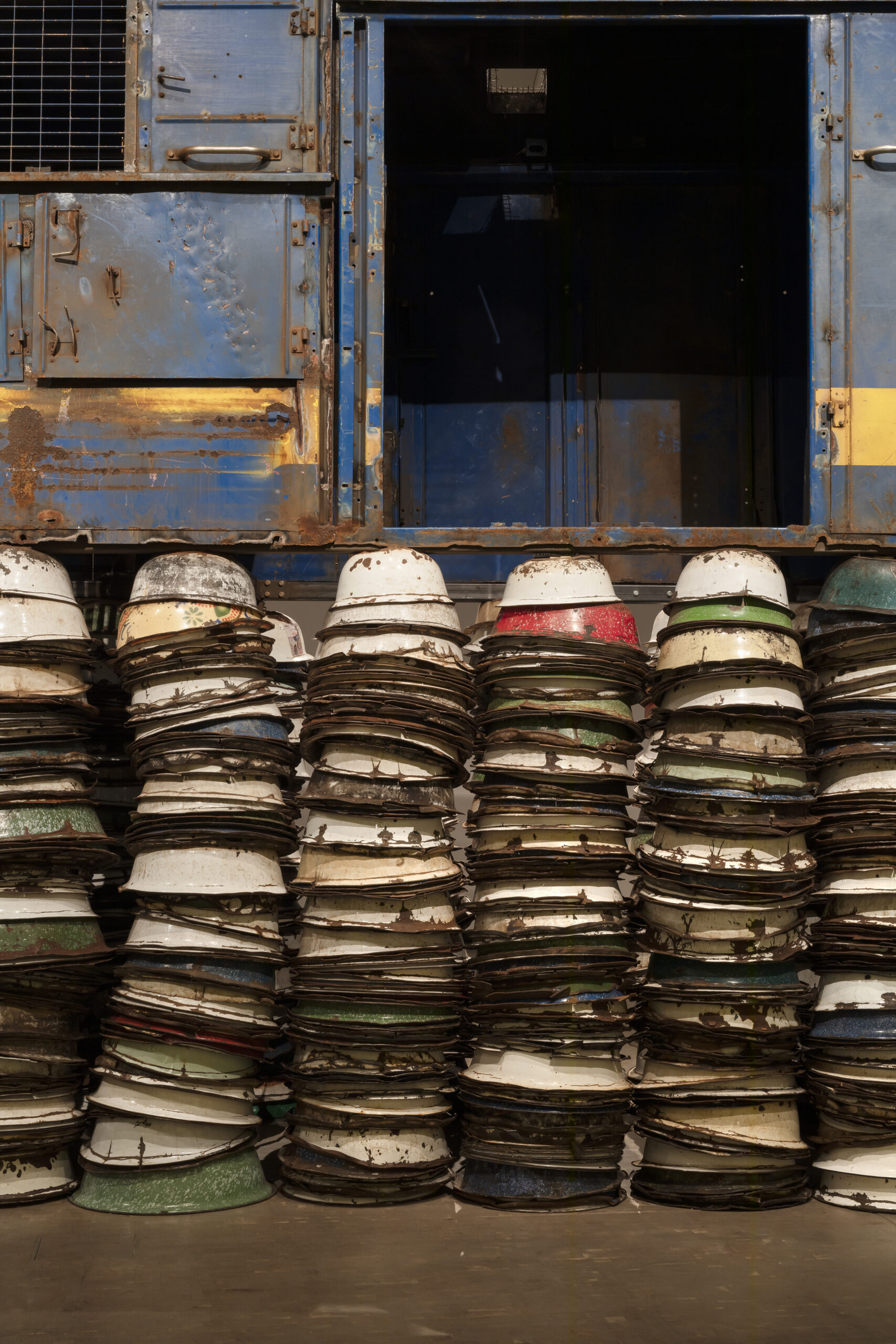
The exhibition’s title plays upon words and phrases in Dagbani, a Gur language that is widely spoken in Tamale. Mahama associates the word for ‘train’ (ziliji) with a phrase that refers to the act of carrying something on one’s head or transporting it in a vehicle (zi-ra) and the words for a load (zili), blood (zim) and the carcass of an animal (jifa). Remnants of the railway−an industrial system of transport and trade−are paired with objects and images referencing the physical labour of bearing weight. The exhibition’s centrepiece is a striking installation in which a multitude of enamelled iron head-pans support a full locomotive, fusing concept, craft, and history in a single, monumental gesture. The pans are a commonplace vessel used in Ghana to carry goods and materials. Mahama amassed a collection of thousands of used pans, exchanging new for old. Chipped, rusted, dented and torn, the objects evidence heavy use. Stacked underneath the train, they bear a locomotive that can be seen as another kind of vessel.
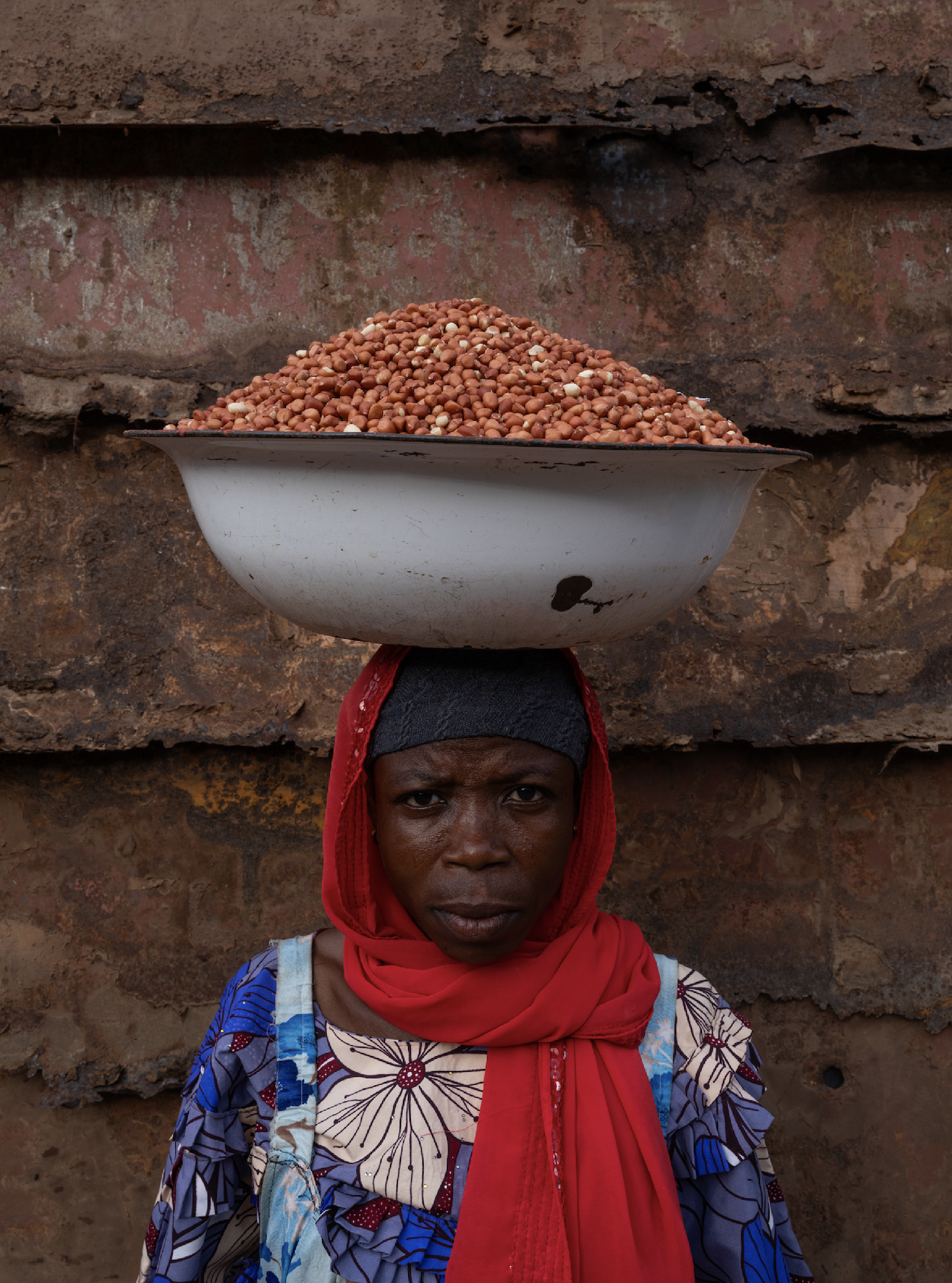
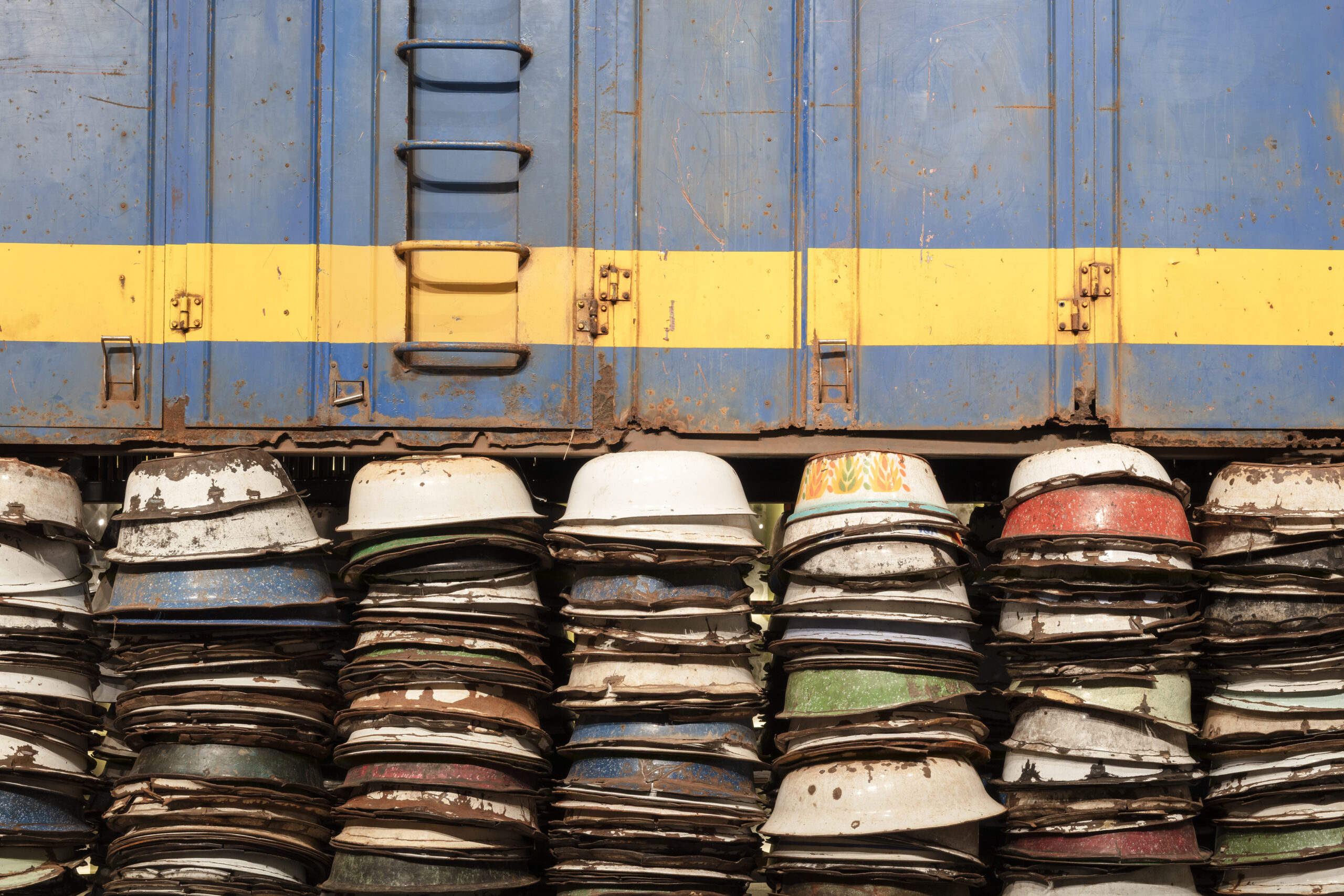
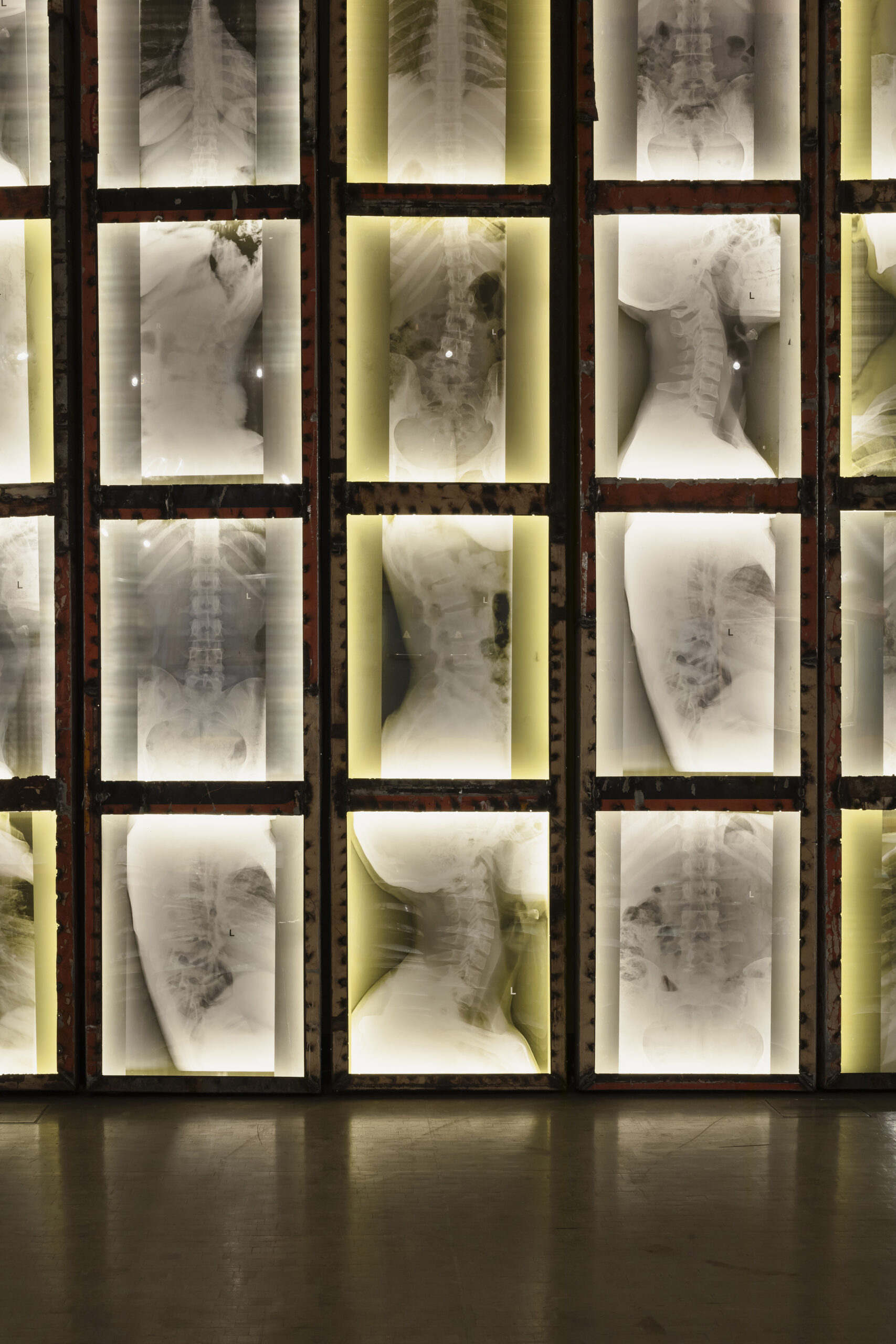
An accompanying series of photographic works examines the physical toll exacted by the daily labour of carrying head-pans. Over 100 X-ray images documenting spinal deformation are presented within a metal scaffold salvaged from the train itself. At once a symbol and instrument of colonial and capitalist extraction, Mahama’s work positions the railway as an infrastructure literally built on the backs of Ghanaian workers, offering a powerful critique of historical and ongoing systems of labour and exploitation.
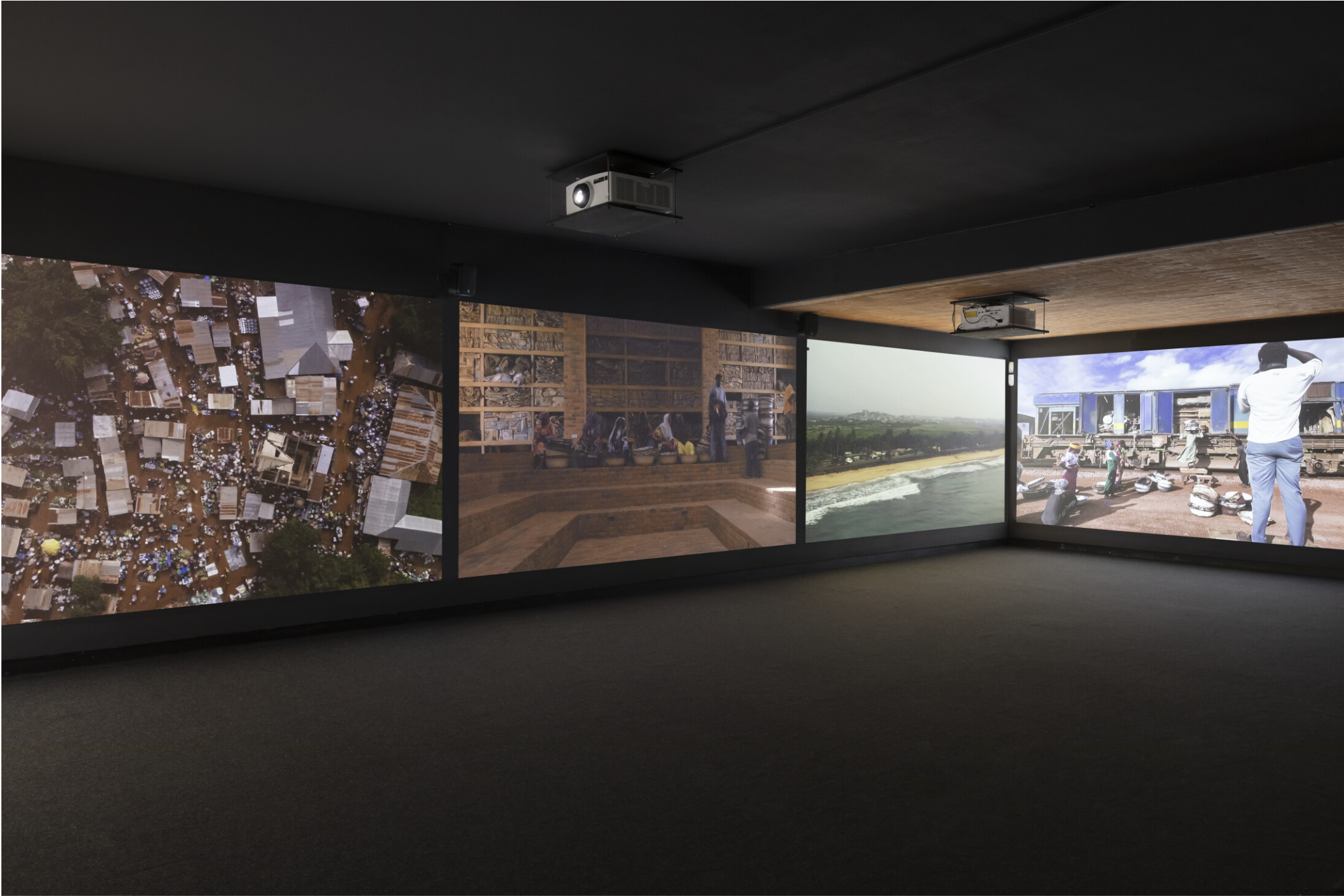
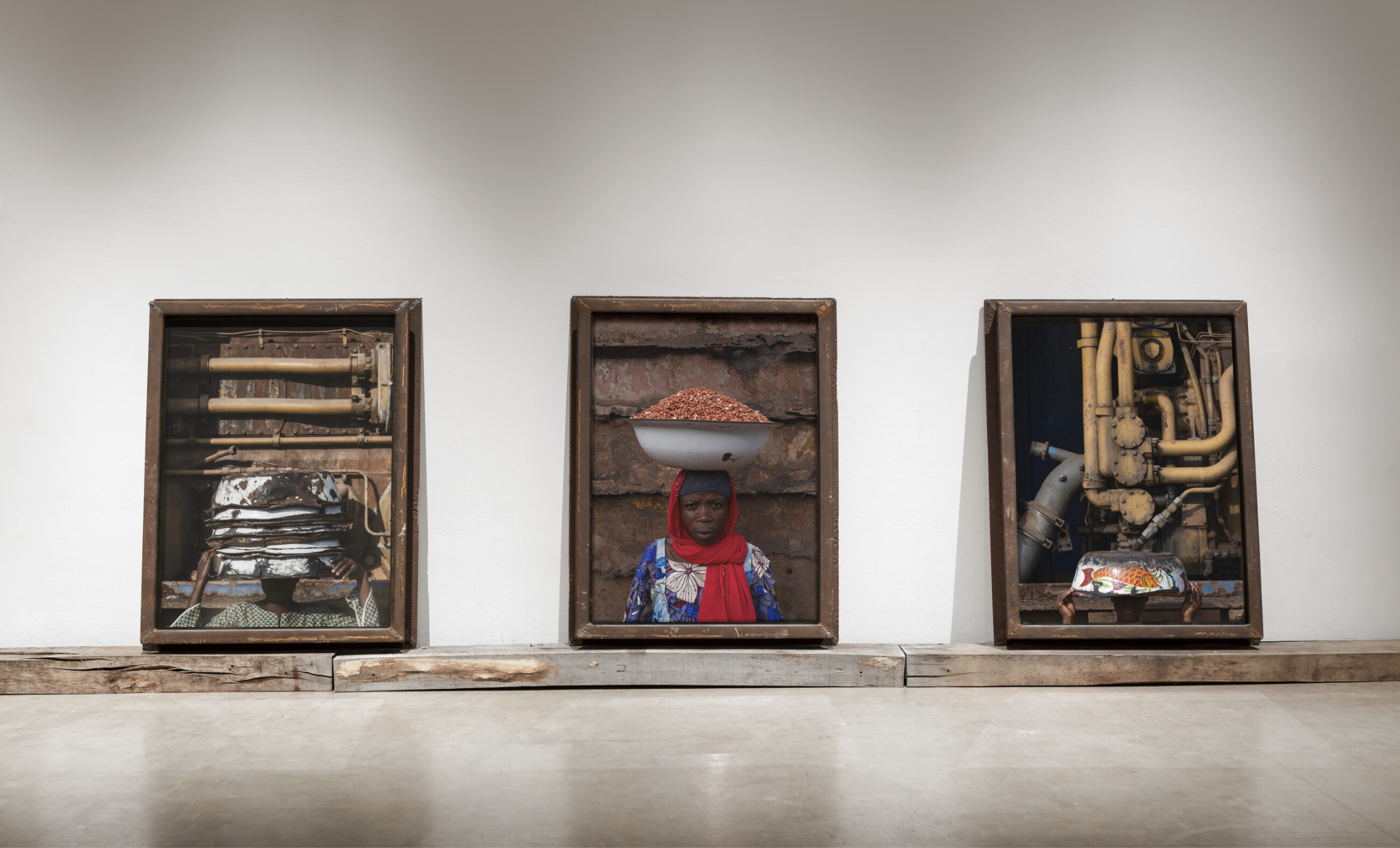
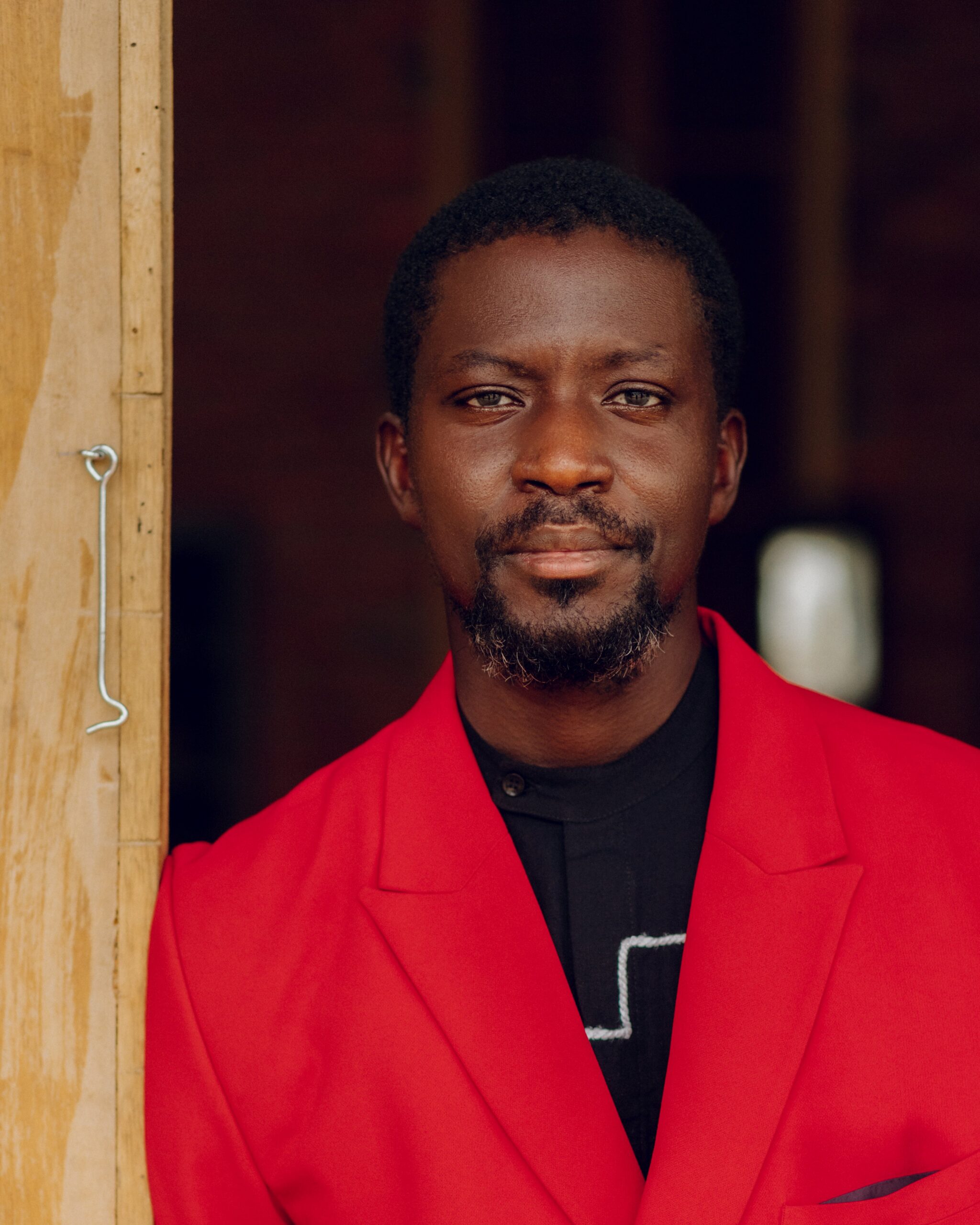
‘Zilijifa’ by Ibrahim Mahama was on view at Kunsthalle Wien, Vienna, until 2 November 2025. All images courtesy of the Gallery Kunsthalle Wien and the artist Ibrahim Mahama. Portrait of Ibrahim Mahama by Carlos Idun-Tawiah.
Ibrahim Mahama takes us inside his landmark solo show at Kunsthalle Wien, Vienna
Ghanaian artist Ibrahim Mahama, widely recognised for his monumental installations that examine labor, materiality, and the histories embedded in everyday objects, is also the founder of the Savannah Centre for Contemporary Art (SCCA Tamale) and Red Clay Studio, platforms that support emerging creatives and experimental practice in Ghana. His landmark solo exhibition at Kunsthalle Wien in Vienna continues to interrogate the intersections of space, memory, and socio-economic histories, expanding the reach of his practice both locally and internationally. Installed across the first floor of Kunsthalle Wien’s Museums quartier, Mahama’s exhibition presents an entirely new body of commissioned work, spanning sculpture, photography, and video. Drawing on the material legacies of colonialism, post-colonialism, and industrialisation in Ghana, his practice collects, preserves, and renders accessible objects, buildings, and ephemera, addressing histories that are often inadequately documented. The exhibition develops Mahama’s ongoing research into the history of the Ghanaian railway network, established under British colonial rule in the 1890s. It realises a long-term ambition: to deconstruct, transport, and exhibit a full-size diesel locomotive−one of several British- and German-built trains Mahama has acquired since 2022. The mechanisms, vessels, and networks used to move goods and people become the foundation for a series of works exploring the act of loading, carrying, and unloading weight, alongside the metaphorical weight of history itself.
The exhibition’s title plays upon words and phrases in Dagbani, a Gur language that is widely spoken in Tamale. Mahama associates the word for ‘train’ (ziliji) with a phrase that refers to the act of carrying something on one’s head or transporting it in a vehicle (zi-ra) and the words for a load (zili), blood (zim) and the carcass of an animal (jifa). Remnants of the railway−an industrial system of transport and trade−are paired with objects and images referencing the physical labour of bearing weight. The exhibition’s centrepiece is a striking installation in which a multitude of enamelled iron head-pans support a full locomotive, fusing concept, craft, and history in a single, monumental gesture. The pans are a commonplace vessel used in Ghana to carry goods and materials. Mahama amassed a collection of thousands of used pans, exchanging new for old. Chipped, rusted, dented and torn, the objects evidence heavy use. Stacked underneath the train, they bear a locomotive that can be seen as another kind of vessel.
An accompanying series of photographic works examines the physical toll exacted by the daily labour of carrying head-pans. Over 100 X-ray images documenting spinal deformation are presented within a metal scaffold salvaged from the train itself. At once a symbol and instrument of colonial and capitalist extraction, Mahama’s work positions the railway as an infrastructure literally built on the backs of Ghanaian workers, offering a powerful critique of historical and ongoing systems of labour and exploitation.
‘Zilijifa’ by Ibrahim Mahama was on view at Kunsthalle Wien, Vienna, until 2 November 2025. All images courtesy of the Gallery Kunsthalle Wien and the artist Ibrahim Mahama. Portrait of Ibrahim Mahama by Carlos Idun-Tawiah.